Showing posts with label Germany. Show all posts

Wednesday, June 1, 2022

Neuschwanstein

From: Germany
Category: collection
Date: August 2020

Neuschwanstein Castle is a 19th-century historicist palace on a rugged hill above the village of Hohenschwangau near Füssen in southwest Bavaria, Germany. The palace was commissioned by King Ludwig II of Bavaria as a retreat and in honour of Richard Wagner. Ludwig chose to pay for the palace out of his personal fortune and by means of extensive borrowing, rather than Bavarian public funds. Construction began in 1869, but was never fully completed.

Tuesday, July 31, 2018

Tuesday, February 28, 2017

Germany

Received from: Germany
Category: Postcrossing - official card
Date: December 2016
Distance: 993 km
Time of travelling: 6 days

Wednesday, February 22, 2017

Berlin

Received from: Germany
Category: Postcrossing - official card
Date: October 2016
Distance: 810 km
Time of travelling: 4 days

The Weißensee Cemetery is a Jewish cemetery located in the neighborhood of Weißensee in Berlin, Germany. It is the second largest Jewish cemetery in Europe. The cemetery covers approximately 42 ha (100 acres) and contains approximately 115,000 graves. It was dedicated in 1880.

Monday, February 20, 2017

Harz National Park

Received from: Germany
Category: Postcrossing - official card
Date: November 2016
Distance: 951 km
Time of travelling: 4 days

Harz National Park is a nature reserve in the German federal states of Lower Saxony and Saxony-Anhalt. It comprises large portions of the western Harz mountain range, extending from Herzberg and Bad Lauterberg at the southern edge to Bad Harzburg and Ilsenburg on the northern slopes. 95% of the area is covered with forests, mainly with spruce and beech woods, including several bogs, granite rocks and creeks. The park is part of the Natura 2000 network of the European Union. Rare animals of the Harz National Park include the dipper, the black stork, peregrine falcon, the European wildcat and especially the Eurasian lynx. The last lynx in the Harz Mountains had been shot in 1818, but in 1999 a project for reintroducing was established. Since 2002 several wild lynxes gave birth. An attempt to return the capercaillie (Auerhuhn) however did not succeed.

Sunday, February 19, 2017

Germany

Received from: Germany
Category: Postcrossing - official card
Date: December 2016
Distance: 1096 km
Time of travelling: 4 days

Saturday, September 3, 2016

Germany

Received from: Germany
Category: Postcrossing - official card
Date: March 2016
Distance: 1046 km
Time of travelling: 12 days

Sunday, March 13, 2016

Aachen

Received from: Germany
Category: Postcrossing - official card
Date: March 2016
Distance: 1215km
Time of travelling: 11 days

Aachen Cathedral was erected on the orders of Charlemagne in AD 796 and was, on completion, in 798, the largest cathedral north of the Alps. It was modeled after the Basilica of San Vitale, in Ravenna, Italy, and was built by Odo of Metz. Charlemagne also desired for the chapel to compete with the Lateran Palace, both in quality and authority. It was originally built in the Carolingian style, including marble covered walls, and mosaic inlay on the dome. On his death, Charlemagne's remains were interred in the cathedral and can be seen there to this day. The cathedral was extended several times in later ages, turning it into a curious and unique mixture of building styles. The throne and gallery portion date from the Ottonian, with portions of the original opus sectile floor still visible. The 13th century saw gables being added to the roof, and after the fire of 1656, the dome was rebuilt. Finally, a choir was added around the start of the 15th century. After, Frederick Barbarossa canonized Charlemagne, in 1165, the chapel became a destination for pilgrims. For 600 years, from 936 to 1531, Aachen Cathedral was the church of coronation for 30 German kings and 12 queens. The church built by Charlemagne is still the main attraction of the city. In addition to holding the remains of its founder, it became the burial place of his successor Otto III. In the upper chamber of the gallery, Charlemagne's marble throne is housed. Aachen Cathedral has been designated as a UNESCO World Heritage Site.

Saturday, February 6, 2016

Wednesday, February 3, 2016

Berlin

From: Germany
Category: from a friend of a friend :)
Date: December 2015

Sunday, November 22, 2015

Braunschweig

Received from: Germany
Category: Postcrossing - official card
Date:  November 2015
Distance: 914 km
Time of travelling: 5 days

Braunschweig is a city of 250,556 people, located in the state of Lower Saxony, Germany. It is located north of the Harz mountains at the farthest navigable point of the Oker river, which connects to the North Sea via the rivers Aller and Weser. A powerful and influential centre of commerce in medieval Germany, Braunschweig was a member of the Hanseatic League from the 13th until the 17th century, and the capital of the state of Brunswick until its disestablishment in 1946. Today, Braunschweig is the second largest city in Lower Saxony and a major centre of scientific research and development.

Wednesday, November 11, 2015

Germany

Received from: Germany
Category: Postcrossing - official card
Date:  October 2015
Distance: 1094 km
Time of travelling: 7 days

Thursday, November 5, 2015

Neuss

Received from: Germany
Category: Postcrossing - official card
Date:  November 2015
Distance: 1153 km
Time of travelling: 4 days

Neuss is a city in North Rhine-Westphalia, Germany. It is located on the west bank of the Rhine opposing Düsseldorf. Neuss is the largest city within the Rhein-Kreis Neuss district. It is primarily known for its historic Roman sites, as well as the annual Neusser Bürger-Schützenfest. In 1984 Neuss celebrated 2000 years since its foundation. It therefore holds the title of "Germany's oldest city" alongside the city of Trier.

Sunday, October 4, 2015

Mannheim

Received from: Germany
Category: Postcrossing - official card
Date:  July 2015
Distance: 1249 km
Time of travelling: 9 days
Mannheim  is a city in the southwestern part of Germany, the third-largest in the German state of Baden-Württemberg after Stuttgart and Karlsruhe. Mannheim is among the twenty largest cities in Germany, with a 2012 population of approximately 295,000 inhabitants. The city is at the centre of the larger densely populated Rhine-Neckar Metropolitan Region which has a population of 2,400,000 and is Germany's eighth-largest metropolitan region.

Tuesday, September 29, 2015

Munich

Received from: Germany
Category: Postcrossing - official card
Date:  September 2015
Distance: 810 km
Time of travelling: 15 days

Oktoberfest is the world's largest Volksfest (beer festival and travelling funfair). Held annually in Munich, Bavaria, Germany, it is a 16-day folk festival running from mid or late September to the first weekend in October, with more than 6 million people from around the world attending the event every year. Locally, it is often simply called the Wiesn, after the colloquial name of the fairgrounds (Theresienwiese) themselves. The Oktoberfest is an important part of Bavarian culture, having been held since 1810. Other cities across the world also hold Oktoberfest celebrations, modeled after the original Munich event.

Monday, September 7, 2015

Leipzig

Received from: Germany
Category: Klub Polki na Obczyźnie
Date: September 2015

Leipzig is derived from the Slavic word Lipsk, which means "settlement where the linden trees (British English: lime trees; U.S. English: basswood trees) stand". An older spelling of the name in English is Leipsic. The Latin name Lipsia was also used.

Thursday, August 27, 2015

Dorsten

Received from: Germany
Category: Klub Polki na Obczyźnie
Date: August 2015

Dorsten is a town in the district of Recklinghausen in North Rhine-Westphalia, Germany and has a population of just below 80,000. Dorsten is situated on the western rim of Westphalia bordering the Rhineland. Its historical old town lies on the south bank of the river Lippe and the Wesel–Datteln Canal and was granted city rights in 1251. During the twentieth century, the town was enlarged in its north by the villages of the former Herrlichkeit Lembeck. While Dorsten's northern districts are thus shaped by the rural Münsterland with its many historical castles, just south of the town the Ruhr region begins, Germany's largest urban agglomeration with more than seven million inhabitants.

Sunday, August 23, 2015

Frankfurt

Received from: Germany
Category: Postcrossing - official card
Date: July 2015
Distance: 1202 km
Time of travelling: 2 days

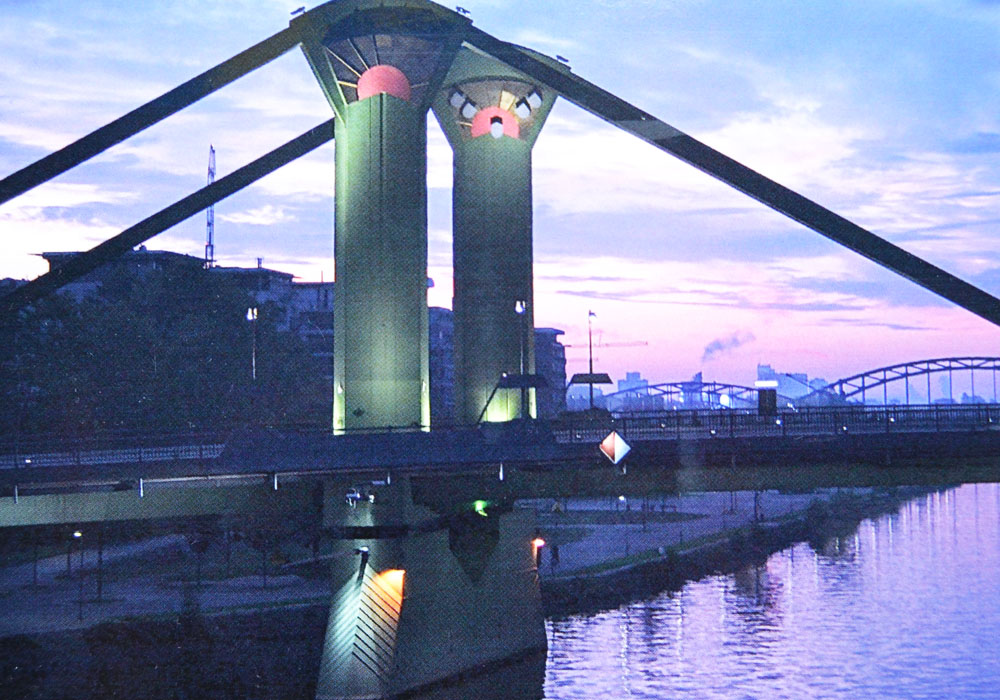
Frankfurt am Main is the largest city in the German state of Hesse and the fifth-largest city in Germany, with a population of 714,241 (2014) within its administrative boundaries. The urban area called Frankfurt Rhein-Main has a population of 2,221,910. The city is at the centre of the larger Frankfurt Rhine-Main Metropolitan Region which has a population of 5,500,000 and is Germany's second-largest metropolitan region. Since the enlargement of the European Union in 2013, the geographic centre of the EU is about 40 km (25 mi) east of Frankfurt.

Monday, August 3, 2015

Berlin

Received from: Germany
Category: Postcrossing - official card
Date: July 2015
Distance: 810 km
Time of travelling: 9 days

The Fernsehturm (English: Berlin TV Tower) is a television tower in central Berlin, Germany. Close to Alexanderplatz in Berlin, the tower was constructed between 1965 and 1969 by the administration of the German Democratic Republic. It was intended as a symbol of Berlin, which it remains today, as it is easily visible throughout the central and some suburban districts of Berlin. With its height of 368 meters, it is the tallest structure in Germany. The tower has become one of the most prominent symbols of the country and is often in the establishing shot of films set in Berlin. Due to its location near Alexanderplatz, the tower is occasionally called Alex Tower.

Sunday, August 2, 2015

Wernigerode

Received from: Germany
Category: Postcrossing - official card
Date: January 2015
Distance: 1094 km
Time of travelling: 16 days
 
Wernigerode is a town in the district of Harz, Saxony-Anhalt, Germany. Until 2007, it was the capital of the district of Wernigerode. Its population was 35,041 in 2012. Wernigerode is located southwest of Halberstadt, and is picturesquely situated on the Holtemme river, on the north slopes of the Harz Mountains. Wernigerode is located on the German Timber-Frame Road.